
misskey_auth 0.1.2-beta  misskey_auth: ^0.1.2-beta copied to clipboard
 librarylibrarian.com
Flutter library for Misskey OAuth authentication. Support for MiAuth format is planned in the future.
Misskey Auth #

Language: 🇺🇸 English | 🇯🇵 日本語
English #
A Flutter library for Misskey OAuth authentication with automatic fallback to MiAuth for older servers.
Features #
- OAuth 2.0 authentication for Misskey servers (v2023.9.0+)
- Automatic fallback to MiAuth for older servers (Planned response in the future.)
- External browser authentication (no embedded WebViews)
- Secure token storage using flutter_secure_storage
- Cross-platform support (iOS/Android)
- PKCE (Proof Key for Code Exchange) implementation
- Custom URL scheme handling for authentication callbacks
Installation #
Add this to your package's pubspec.yaml file:
dependencies:
  misskey_auth: ^0.1.2-beta
Quick Start #
1. Set up your client_id page
Misskey's OAuth 2.0 follows the IndieAuth specification. You need:
client_idmust be a valid URL (e.g.,https://yoursite/yourapp/)- The HTML hosted at
client_idmust include the following<link>:<link rel="redirect_uri" href="https://yoursite/yourapp/redirect.html"> - The
redirect_uriin authorization requests must exactly match the URL in the<link>tag (protocol, case, trailing slash, etc.)
Example HTML page
<!DOCTYPE html>
<html>
<head>
  <title>My App</title>
  <link rel="redirect_uri" href="https://yoursite/yourapp/redirect.html">
</head>
<body>
  <div class="h-app">
    <a href="https://yoursite/yourapp/" class="u-url p-name">Your Misskey App</a>
  </div>
</body>
</html>
Example redirect page
<!DOCTYPE html>
<html>
<body>
    <script>
        const urlParams = new URLSearchParams(window.location.search);
        const code = urlParams.get('code');
        const state = urlParams.get('state');
        const appUrl = `yourscheme://oauth/callback?code=${encodeURIComponent(code)}&state=${encodeURIComponent(state || '')}`;
        window.location.href = appUrl;
    </script>
</body>
</html>
2. Basic Authentication
import 'package:misskey_auth/misskey_auth.dart';

// Authentication configuration
final config = MisskeyOAuthConfig(
  host: 'misskey.io',
  clientId: 'https://yourpage/yourapp/',
  redirectUri: 'https://yourpage/yourapp/redirect.html',
  scope: 'read:account write:notes',
  callbackScheme: 'yourscheme',
);

// Create client and authenticate
final client = MisskeyOAuthClient();
final token = await client.authenticate(config);
3. Platform Configuration
iOS Configuration
Add to ios/Runner/Info.plist:
<key>CFBundleURLTypes</key>
<array>
    <dict>
        <key>CFBundleURLName</key>
        <string>com.yourcompany.yourapp</string>
        <key>CFBundleURLSchemes</key>
        <array>
            <string>yourscheme</string>
        </array>
    </dict>
</array>
Android Configuration
Add to android/app/src/main/AndroidManifest.xml:
<activity android:name="com.linusu.flutter_web_auth.CallbackActivity" android:exported="true">
    <intent-filter android:label="flutter_web_auth">
        <action android:name="android.intent.action.VIEW" />
        <category android:name="android.intent.category.DEFAULT" />
        <category android:name="android.intent.category.BROWSABLE" />
        <data android:scheme="yourscheme" />
    </intent-filter>
</activity>
Differences in MiAuth and OAuth Configuration (Key Points for App Integration)
- This configuration (registration of the URL scheme) is done on the "app side." It is not included in the library's Manifest.
- Both methods require a "custom URL scheme" to return from an external browser to the app.
- The difference lies in how to specify "where to return from the browser."
- OAuth: Since it needs to return to an HTTPS
redirect_urifrom the authorization server,redirect.htmlplaced there ultimately redirects back toyourscheme://...for the app. - MiAuth: The
callbackquery of the authentication start URL specifiesyourscheme://...from the beginning (no need forhttps).
Example of MiAuth
import 'package:misskey_auth/misskey_auth.dart';

final miClient = MisskeyMiAuthClient();
final miConfig = MisskeyMiAuthConfig(
  host: 'misskey.io',
  appName: 'Your App',
  callbackScheme: 'yourscheme',          // Scheme registered on the app side
  permissions: ['read:account', 'write:notes'],
  iconUrl: 'https://example.com/icon.png', // Optional
);
final miRes = await miClient.authenticate(miConfig);
Example of OAuth
import 'package:misskey_auth/misskey_auth.dart';

final oauthClient = MisskeyOAuthClient();
final oauthConfig = MisskeyOAuthConfig(
  host: 'misskey.io',
  clientId: 'https://yourpage/yourapp/',
  redirectUri: 'https://yourpage/yourapp/redirect.html',
  scope: 'read:account write:notes',
  callbackScheme: 'yourscheme',          // Scheme registered on the app side
);
final token = await oauthClient.authenticate(oauthConfig);
How to Support Both Methods in the Same App
- By registering the same
scheme(e.g.,yourscheme) in iOS'sInfo.plistand Android'sAndroidManifest.xml, it can be shared between OAuth and MiAuth. - If you implement the OAuth
redirect.htmlto redirect toyourscheme://oauth/callback?..., you can reuse the same path expression (yourscheme://oauth/callback) for MiAuth'scallback. - For Android, matching only on the
schemeis sufficient as shown below (thehostandpathare optional).
<activity android:name="com.linusu.flutter_web_auth.CallbackActivity" android:exported="true">
    <intent-filter android:label="flutter_web_auth">
        <action android:name="android.intent.action.VIEW" />
        <category android:name="android.intent.category.DEFAULT" />
        <category android:name="android.intent.category.BROWSABLE" />
        <data android:scheme="yourscheme" />
    </intent-filter>
    <!-- Add this only if you want to restrict by host/path -->
    <!-- <intent-filter> ... <data android:scheme="yourscheme" android:host="oauth" android:path="/callback"/> ... </intent-filter> -->
  </activity>
API Reference #
MisskeyOAuthConfig
Configuration class for Misskey OAuth authentication.
class MisskeyOAuthConfig {
  final String host;           // Misskey server host (e.g., 'misskey.io')
  final String clientId;       // Your client_id page URL
  final String redirectUri;    // Your redirect page URL
  final String scope;          // Requested scopes (e.g., 'read:account write:notes')
  final String callbackScheme; // Your app's custom URL scheme
}
MisskeyOAuthClient
Main client for handling Misskey OAuth authentication.
class MisskeyOAuthClient {
  /// Authenticate with Misskey server
  Future<OAuthTokenResponse?> authenticate(MisskeyOAuthConfig config);

  /// Get OAuth server information
  Future<OAuthServerInfo?> getOAuthServerInfo(String host);

  /// Get stored access token
  Future<String?> getStoredAccessToken();

  /// Clear stored tokens
  Future<void> clearTokens();
}
MisskeyMiAuthClient
Main client for handling Misskey MiAuth authentication.
class MisskeyMiAuthClient {
  /// Authenticate with Misskey server using MiAuth
  Future<MiAuthTokenResponse> authenticate(MisskeyMiAuthConfig config);

  /// Get stored access token
  Future<String?> getStoredAccessToken();

  /// Clear stored tokens
  Future<void> clearTokens();
}
Error Handling #
The library provides comprehensive error handling with custom exception classes for different scenarios. For detailed information about each exception class and their usage, please refer to the documentation on pub.dev.
The library includes exception classes for:
- Authentication configuration errors
- Network and connectivity issues
- OAuth and MiAuth specific errors
- User cancellation and authorization failures
- Secure storage operations
- Response parsing errors
Common Errors #
Invalid redirect_uri: Theredirect_uriin the authorization request doesn't exactly match the one in theclient_idpage's<link rel="redirect_uri">tag- Check domain case, trailing slashes, and HTTPS usage
License #
This project is licensed under the 3-Clause BSD License - see the LICENSE file for details.
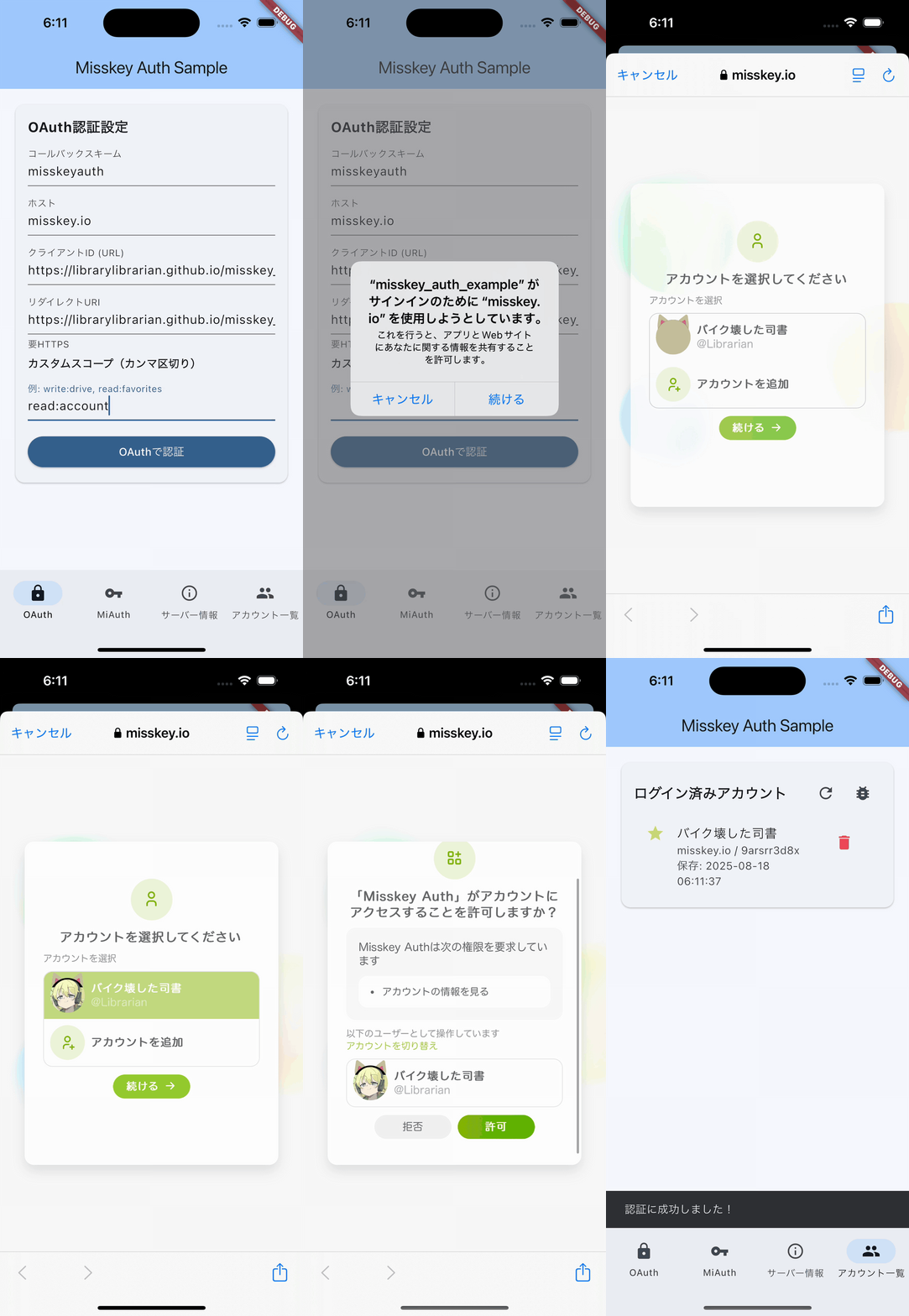
Example App Verification #
This library includes a sample app to verify its functionality.
Running the Example App
-
Clone or download the repository
-
Navigate to the example directory:
cd example -
Install dependencies:
flutter pub get -
Run the app:
flutter run
Features in the Example App
- Server Info Check: Verify if Misskey server supports OAuth 2.0
- Authentication Setup: Configure host, client ID, redirect URI, scope, and callback scheme
- OAuth Flow: Execute authentication using actual browser
- Token Management: Display and delete access tokens after successful authentication
- Error Handling: Verify behavior in various error scenarios
Default Configuration
The example app comes with the following default values:
- Host:
misskey.io - Client ID:
https://librarylibrarian.github.io/misskey_auth/ - Redirect URI:
https://librarylibrarian.github.io/misskey_auth/redirect.html - Scope:
read:account write:notes - Callback Scheme:
misskeyauth
These values are provided for testing purposes, but you should change them to your own values when developing actual apps.
Related Links #
Japanese #
MisskeyのOAuth認証・MiAuth認証をFlutterアプリで簡単に扱うためのライブラリ。
内容 #
- MisskeyサーバーのOAuth 2.0認証対応(v2023.9.0以降)
- 古いサーバーでは自動的にMiAuth認証にフォールバック(今後対応予定)
- 埋め込みWebViewを使用しない認証
- flutter_secure_storageを使用したトークン保存
- クロスプラットフォーム対応(iOS/Android)
- PKCE(Proof Key for Code Exchange)実装
- 認証コールバック用カスタムURLスキーム対応
インストール #
pubspec.yamlファイルに以下を追加してください:
dependencies:
  misskey_auth: ^0.1.2-beta
クイックスタート #
1. client_idページの設定
MisskeyのOAuth 2.0はIndieAuth仕様に準拠しています。以下が必要です:
client_idは有効なURLであること(例:https://yoursite/yourapp/)client_idでホストしているHTMLに、以下の<link>を含めること:<link rel="redirect_uri" href="https://yoursite/yourapp/redirect.html">- 認可リクエストの
redirect_uriが、上記<link>のURLと完全一致すること(プロトコル、大文字小文字、末尾スラッシュまで一致)
HTMLページ例
<!DOCTYPE html>
<html>
<head>
  <title>My App</title>
  <link rel="redirect_uri" href="https://yoursite/yourapp/redirect.html">
</head>
<body>
  <div class="h-app">
    <a href="https://yoursite/yourapp/" class="u-url p-name">Your Misskey App</a>
  </div>
</body>
</html>
リダイレクトページ例
<!DOCTYPE html>
<html>
<body>
    <script>
        const urlParams = new URLSearchParams(window.location.search);
        const code = urlParams.get('code');
        const state = urlParams.get('state');
        const appUrl = `yourscheme://oauth/callback?code=${encodeURIComponent(code)}&state=${encodeURIComponent(state || '')}`;
        window.location.href = appUrl;
    </script>
</body>
</html>
2. 基本的な認証
import 'package:misskey_auth/misskey_auth.dart';

// 認証設定
final config = MisskeyOAuthConfig(
  host: 'misskey.io',
  clientId: 'https://yourpage/yourapp/',
  redirectUri: 'https://yourpage/yourapp/redirect.html',
  scope: 'read:account write:notes',
  callbackScheme: 'yourscheme',
);

// クライアント生成と認証
final client = MisskeyOAuthClient();
final token = await client.authenticate(config);
3. プラットフォーム設定
iOS設定
ios/Runner/Info.plistに追加:
<key>CFBundleURLTypes</key>
<array>
    <dict>
        <key>CFBundleURLName</key>
        <string>com.yourcompany.yourapp</string>
        <key>CFBundleURLSchemes</key>
        <array>
            <string>yourscheme</string>
        </array>
    </dict>
</array>
Android設定
android/app/src/main/AndroidManifest.xmlに追加:
<activity android:name="com.linusu.flutter_web_auth.CallbackActivity" android:exported="true">
    <intent-filter android:label="flutter_web_auth">
        <action android:name="android.intent.action.VIEW" />
        <category android:name="android.intent.category.DEFAULT" />
        <category android:name="android.intent.category.BROWSABLE" />
        <data android:scheme="yourscheme" />
    </intent-filter>
</activity>
MiAuth と OAuth の設定の違い(アプリ組み込み時のポイント)
- この設定(URLスキームの登録)は「アプリ側」で行います。ライブラリ内のManifestには含めません。
- 両方式とも、外部ブラウザからアプリへ戻すために「カスタムURLスキーム」が必要です。
- 相違点は「ブラウザからどこに戻すか」の指定方法です。
- OAuth: 認可サーバーからはHTTPSの
redirect_uriに戻る必要があるため、そこに配置したredirect.htmlが最終的にyourscheme://...へリダイレクトしてアプリに戻します。 - MiAuth: 認証開始URLの
callbackクエリに、最初からyourscheme://...を指定します(httpsは不要)。
- OAuth: 認可サーバーからはHTTPSの
MiAuth の例(Dart)
import 'package:misskey_auth/misskey_auth.dart';

final miClient = MisskeyMiAuthClient();
final miConfig = MisskeyMiAuthConfig(
  host: 'misskey.io',
  appName: 'Your App',
  callbackScheme: 'yourscheme',          // アプリ側で登録したスキーム
  permissions: ['read:account', 'write:notes'],
  iconUrl: 'https://example.com/icon.png', // 任意
);
final miRes = await miClient.authenticate(miConfig);
OAuth の例
import 'package:misskey_auth/misskey_auth.dart';

final oauthClient = MisskeyOAuthClient();
final oauthConfig = MisskeyOAuthConfig(
  host: 'misskey.io',
  clientId: 'https://yourpage/yourapp/',
  redirectUri: 'https://yourpage/yourapp/redirect.html',
  scope: 'read:account write:notes',
  callbackScheme: 'yourscheme',          // アプリ側で登録したスキーム
);
final token = await oauthClient.authenticate(oauthConfig);
両方式を同一アプリでサポートするには
- iOSの
Info.plist・AndroidのAndroidManifest.xmlで同じsheme(例:yourscheme)を1つ登録すれば、OAuth/MiAuthで共用可能です。 - OAuth用の
redirect.htmlは、yourscheme://oauth/callback?...へ飛ばす実装にしておくと、MiAuthのcallbackでも同じパス表現(yourscheme://oauth/callback)を使い回せます。 - Androidは以下のように
schemeのみのマッチで十分です(hostやpathは任意)。
<activity android:name="com.linusu.flutter_web_auth.CallbackActivity" android:exported="true">
    <intent-filter android:label="flutter_web_auth">
        <action android:name="android.intent.action.VIEW" />
        <category android:name="android.intent.category.DEFAULT" />
        <category android:name="android.intent.category.BROWSABLE" />
        <data android:scheme="yourscheme" />
    </intent-filter>
    <!-- 必要に応じて、host/pathで限定したい場合のみ追記 -->
    <!-- <intent-filter> ... <data android:scheme="yourscheme" android:host="oauth" android:path="/callback"/> ... </intent-filter> -->
  </activity>
API リファレンス #
MisskeyOAuthConfig
Misskey OAuth認証の設定クラス。
class MisskeyOAuthConfig {
  final String host;           // Misskeyサーバーのホスト(例: 'misskey.io')
  final String clientId;       // client_idページのURL
  final String redirectUri;    // リダイレクトページのURL
  final String scope;          // 要求するスコープ(例: 'read:account write:notes')
  final String callbackScheme; // アプリのカスタムURLスキーム
}
MisskeyOAuthClient
Misskey OAuth認証を処理するメインクラス
class MisskeyOAuthClient {
  /// Misskeyサーバーで認証を実行
  Future<OAuthTokenResponse?> authenticate(MisskeyOAuthConfig config);

  /// OAuthサーバー情報を取得
  Future<OAuthServerInfo?> getOAuthServerInfo(String host);

  /// 保存されたアクセストークンを取得
  Future<String?> getStoredAccessToken();

  /// 保存されたトークンを削除
  Future<void> clearTokens();
}
MisskeyMiAuthClient
Misskey MiAuth認証を処理するメインクラス
class MisskeyMiAuthClient {
  /// MisskeyサーバーでMiAuth認証を実行
  Future<MiAuthTokenResponse> authenticate(MisskeyMiAuthConfig config);

  /// 保存されたアクセストークンを取得
  Future<String?> getStoredAccessToken();

  /// 保存されたトークンを削除
  Future<void> clearTokens();
}
エラーハンドリング #
ライブラリには以下のカテゴリの例外クラスが含まれています:
- 認証設定エラー
- ネットワーク・接続エラー
- OAuth・MiAuth固有のエラー
- ユーザーキャンセル・認可失敗
- セキュアストレージ操作エラー
- レスポンス解析エラー
詳細についてはpub.devのドキュメントを参考にして下さい
よくあるエラー #
Invalid redirect_uri: 認可リクエストのredirect_uriと、client_idページの<link rel="redirect_uri">が完全一致していない- ドメインの大文字小文字、末尾スラッシュ、HTTPS使用を確認してください
ライセンス #
このプロジェクトは3-Clause BSD Licenseの下で公開されています。詳細はLICENSEファイルをご覧ください。
サンプルアプリでの確認方法 #
このライブラリには動作を確認できるサンプルアプリが同梱されています。
サンプルアプリの実行
-
リポジトリをクローンまたはダウンロード
-
サンプルアプリディレクトリに移動:
cd example -
依存関係をインストール:
flutter pub get -
アプリを実行:
flutter run
サンプルアプリの機能
- サーバー情報の確認: MisskeyサーバーがOAuth 2.0をサポートしているかチェック
- 認証設定: ホスト、クライアントID、リダイレクトURI、スコープ、コールバックスキームの設定
- OAuth認証フロー: 実際のブラウザを使った認証の実行
- トークン管理: 認証成功時のアクセストークンの表示・削除
- エラーハンドリング: 各種エラー状況での動作確認
デフォルト設定
サンプルアプリには以下のデフォルト値が設定されています:
- ホスト:
misskey.io - クライアントID:
https://librarylibrarian.github.io/misskey_auth/ - リダイレクトURI:
https://librarylibrarian.github.io/misskey_auth/redirect.html - スコープ:
read:account write:notes - コールバックスキーム:
misskeyauth
これらの値は動作確認用として提供されていますが、実際のアプリ開発時は独自の値に変更してください。 自分が対象としているサーバーでライブラリが利用できるかのチェックにも使えます。
リンク #
Metadata
Publisher
Weekly Downloads
Metadata
Flutter library for Misskey OAuth authentication. Support for MiAuth format is planned in the future.
Homepage
Repository (GitHub)
View/report issues
Topics
#authentication #oauth #misskey #social-media #api
License
 unknown (license)
Dependencies
crypto, cupertino_icons, dio, flutter, flutter_secure_storage, flutter_web_auth_2

