
bloc_preview
A zero-configuration BLoC state inspector with a built-in web dashboard.
Attach it as a BlocObserver and open your browser — no external servers,
no extra packages, no setup.
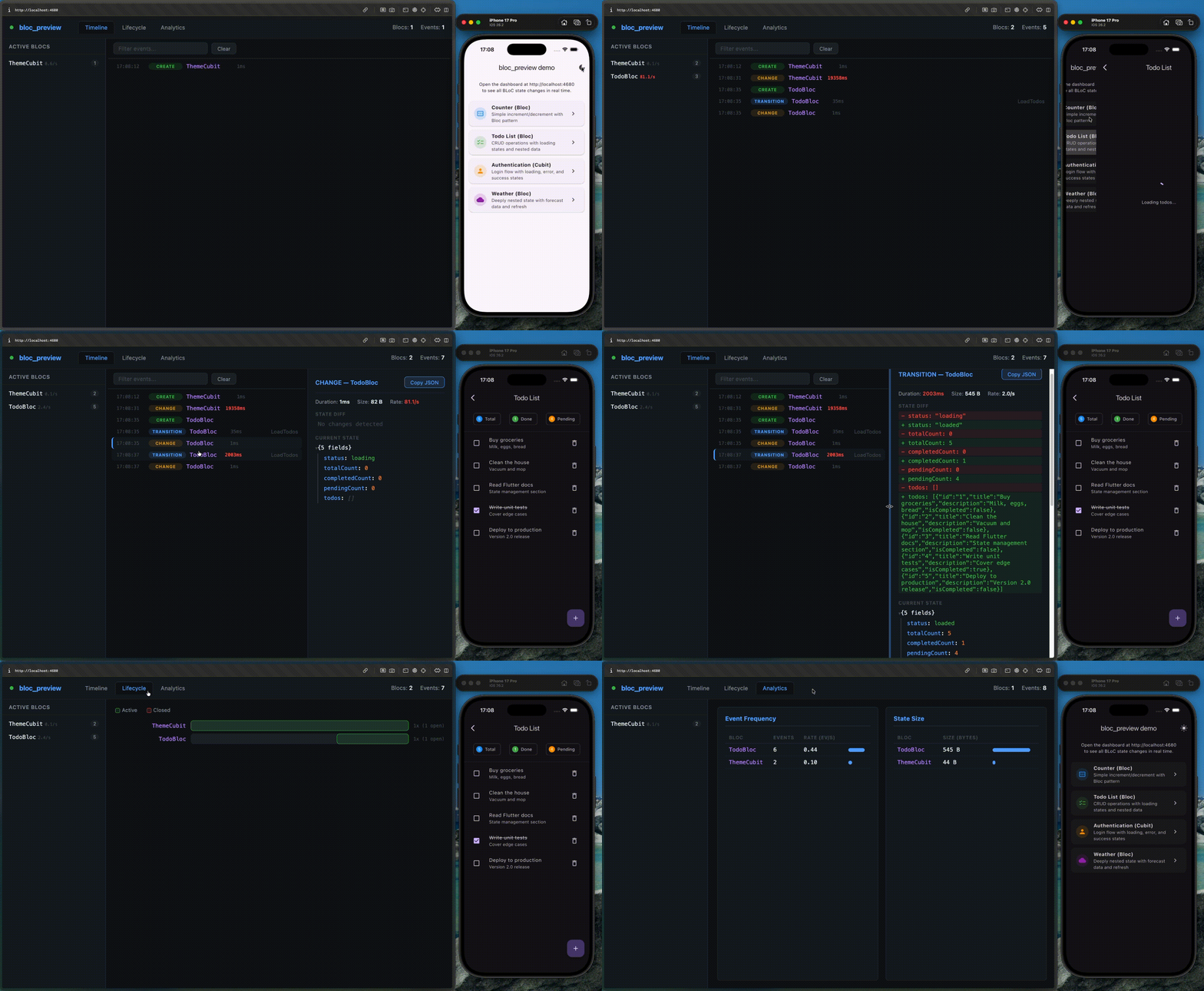
Features
- Zero configuration — one line of code to get started.
- Built-in web dashboard — served locally, no external dependencies.
- Real-time updates — state changes, events, and errors streamed via WebSocket.
- State diff — highlights exactly which fields changed between transitions, like a git diff.
- Performance timeline — measures milliseconds between events to spot slow transitions.
- Snapshot export — copy any state as JSON to clipboard for bug reports or tests.
- Bloc lifecycle map — visualises when each bloc was created and closed on a timeline, helping detect memory leaks.
- Event frequency monitor — detects event storms and shows per-bloc event rates with warnings.
- State size tracker — reports serialised state size so you can spot unbounded growth.
- Automatic serialization — works with
toJson(),JsonEncodable, or plaintoString(). - Filterable timeline — search by bloc name or event type.
- Collapsible state tree — inspect deeply nested states with ease.
Getting started
Add bloc_preview to your dev_dependencies:
dev_dependencies:
  bloc_preview: ^1.0.0
Usage
Basic setup
import 'package:bloc_preview/bloc_preview.dart';
import 'package:flutter_bloc/flutter_bloc.dart';

void main() {
  Bloc.observer = BlocPreviewObserver();
  // Dashboard is now live at http://localhost:4680
  runApp(const MyApp());
}
Custom configuration
Bloc.observer = BlocPreviewObserver(
  config: PreviewConfig(
    port: 9000,            // custom port
    host: '0.0.0.0',       // allow LAN access
    maxEvents: 500,        // event buffer size
  ),
);
Better state serialization
For the best experience implement JsonEncodable on your states:
class CounterState implements JsonEncodable {
  const CounterState({required this.count});
  final int count;

  @override
  Map<String, dynamic> toJson() => {'count': count};
}
If your state already has a toJson() method (e.g. from json_serializable
or freezed), it will be picked up automatically — no extra interface needed.
States without toJson() are serialized by parsing their toString() output
into a structured tree.
Cleanup
final observer = BlocPreviewObserver();
Bloc.observer = observer;

// Later, when no longer needed (e.g. in tests):
await observer.dispose();
Dashboard tabs
Timeline
Live event feed showing every create, transition, change, close, and error. Each row displays the duration in milliseconds since the last event for that bloc — slow transitions (>100ms) are highlighted in red.
Click any event to open the detail panel with:
- State diff — red/green comparison of previous vs current state
- Current state — collapsible tree view
- Event data — the triggering event
- Copy JSON — export the state to clipboard
Lifecycle
Horizontal bar chart showing when each bloc was created and closed. Helps you detect:
- Blocs that are never closed (potential memory leaks)
- Blocs that are created too often (unnecessary rebuilds)
- Overlapping instances of the same bloc type
Analytics
Two data tables:
- Event frequency — events per second for each bloc, with visual bars and red warnings when the rate exceeds 10 ev/s (event storm detection)
- State size — serialised size of each bloc's current state, with warnings for states exceeding 5 KB
How it works
BlocPreviewObserver extends BlocObserver and listens to every BLoC
lifecycle event. On creation it starts a lightweight HTTP server that serves a
single-page web dashboard. Every event is serialized (with previous state for
diff computation) and pushed to all connected browsers over WebSocket.
Additional information
- Issues: https://github.com/janrydzewski/bloc_preview/issues
- Contributing: Pull requests are welcome.
- License: MIT
Libraries
- bloc_preview
- A zero-configuration BLoC state inspector with a built-in web dashboard.